Sunday, July 23, 2006

True Faithfulness

By: Dr. H. D. Cockerham, Pastor Emeritus, Zion Baptist Church; Chairman, Board of Trustees, Simmons College of Kentucky

Daniel 3:16-19

"(V16) Shadrach, Meshach, and Abednego, answered and said to the king, O Nebuchadnezzar, we are not careful to answer thee in this matter.
(V 17) If it be so, our God whom we serve is able to deliver us from the burning fiery furnace, and he will deliver us out of thine hand, O king.
(V18) But if not, be it known unto thee, O king, that we will not serve thy gods, nor worship the golden image which thou hast set up.
(V19) Then was Nebuchadnezzar full of fury, and the form of his visage was changed against Shadrach, Meshach, and Abednego: therefore he spake, and commanded that they should heat the furnace once seven times more than it was wont to be heated. "
True faithfulness requires a willingness to be faithful to God no matter what happens in our lives. Shadrach, Meshach, and Abednego were pressured in their circumstance to deny God, but they chose to trust God to be their deliverer. “If it be so, our God whom we serve is able to deliver us from the burning fiery furnace, and he will deliver us out of thine hand, O king (v. 17)."

We should be faithful to serve God whether He intervenes in our fiery circumstances or not. Our eternal reward is worth any suffering we may endure. We should not magnify ourselves and get too “kingly.” Christians should be different, and love those who offend them, but they should not do so at the expense of God’s glory.

Oftentimes, we make excuses for bowing down, “We will worship this one time, and ask God to forgive us;” “The King appointed us, and we owe it to him;” “We’re not hurting anybody if we bow down.”

We know how to make excuses when we want to make something up, “I would support Simmons, but….” However, Simmons needs to survive because the world is looking on and wants her to fail. Excuses are dangerous rationalizations. What excuses do you use for not standing up for what is right?

God said, “Thou shalt have none other gods before me (Deuteronomy 5:7)." The Hebrew boys would not break the rules. They would magnify the Excellency of God.

The king tried to attract their attention, and ordered them to be put in the fiery furnace, “…he spake, and commanded that they should heat the furnace once seven times more than it was wont to be heated.” (Daniel 3:19) Sometimes we are tempted to fret and go in a different direction. The king ordered the boys to be tied up and laid down. He had the bravest and strongest men throw Shadrach, Meshach and Abednego into the fiery furnace. The heat was so severe that the men who threw them in suffocated.

Later, King Nebuchadnezzar was astonished. He asked his counselors, "Did not we cast three men bound into the midst of the fire? They answered and said unto the king, True, O king (V 24)." King Nebuchadnezzar answered and said, “Lo, I see four men loose, walking in the midst of the fire…and the form of the fourth is like the Son of God (V 25)."

God is able to make a way out of no way! Stay put. Pray in season and out of season. Give Him praise, give Him thanks, and lift up His name. He is faithful in His promises. He will deliver. He will save. Simmons will survive. Even with friends lost, God is able to raise new friends. Trusting God requires true faithfulness. Be faithful!

-----------

Noon Chapel Service Message Notes for April 24, 2006. Message summarized by Angela Lee Price, Student, Simmon College of Kentucky. Reprinted with permission of Dr. H. D. Cockerham. Audio cassettes of sermons are available at the Simmons College bookstore.
-----------

Remember, it is not Mohammad, Buddha, Confucius, nor New Age that saves. Jesus Saves!


Friday, July 21, 2006

It's A Spiritual Gift: Don't Get It Twisted!

Minister Angela Lee Price

Have you ever tried to do something nice for someone only to have them read into your gesture something that wasn't there? A friend, co-worker, brother or sister in Christ "gets it twisted" and starts smiling, and staring at you as if to say, "I know you like me," after you compliment their shoes. You invite a friend to stay temporarily in your home while in their crisis situation only to discover they've "gotten it twisted," and you can't get rid of them months after they've gotten through their "going through." Your generous gifts were misunderstood, misapplied and misused.

The Lord has done something nice. He has given spiritual gifts to Christians, but often His gifts are misunderstood, misapplied and misused. Spiritual gifts is a subject about which there is much debate within Christianity, and many have "gotten it twisted." Some believe all, or certain gifts, ceased in the first century and none, or only a few, are available to 21st century believers. Other Christians believe all spiritual gifts are available to believers today through the Holy Spirit. Of those who believe in gifts of the Spirit, there is great debate over when certain gifts are received. Some believe they are bestowed on believers when they accept Jesus Christ as Lord and Savior, and others believe Christians can receive a “Second Blessing” at some date subsequent to conversion which is evidenced by speaking in tongues. Know what gift(s) you have, and don't "get it twisted."

According to a 2001 St. Stephen Church Spiritual Gift Assessment Guide, spiritual gifts are “special abilities used for spiritual purposes given by the Holy Spirit to every believer in the body of Christ according to God’s design and grace for use within the context of the Body.” Spiritual gifts differ from talents in that talents are given to unbelievers and spiritual gifts are given to believers when they are born again. Talents, like gifts, can and should be use to glorify God. Spiritual gifts are found in four key passages in the Bible, Romans 12, l Corinthians 12, Ephesians 4, and 1 Peter 4. Opinions differ over the actual number of gifts in those and other ancillary verses.

Spiritual gift assessment guides or surveys can be good tools to help Christians identify their spiritual gifts. I completed an assessment in 2001 and retook the same assessment in 2005. It measured gift strengths in fourteen areas, administration, counseling, craftsmanship, creative communication, encouragement, evangelism, giving, helps, hospitality, leadership, mercy, prophecy, shepherding and teaching.

The 2001 guide consisted of 112 statements. Respondents were asked to rank the degree to which each statement was true for them from “0, - Not at all or never,” to “3 – Consistently or definitely true.” In 2001 my gifts were teaching, administration and prophecy. In 2005, the ranking was the same as 2001, however, I was surprised to discover that I received tie scores for administration and creative communication, and prophecy and shepherding respectively.

Use any spiritual gifts analysis with caution. Ask the Lord for discernment and be sure to take a second assessment. In researching the gift of tongues, for example, I learned that people in the occult speak in tongues and chant "Jesus" to invoke the powers of darkness. Satan is a master of the counterfeit so research spiritual gifts thoroughly and don't "get it twisted!"
Remember, it is not Mohammad, Buddha, Confucius, nor New Age that saves. Jesus saves!

-------
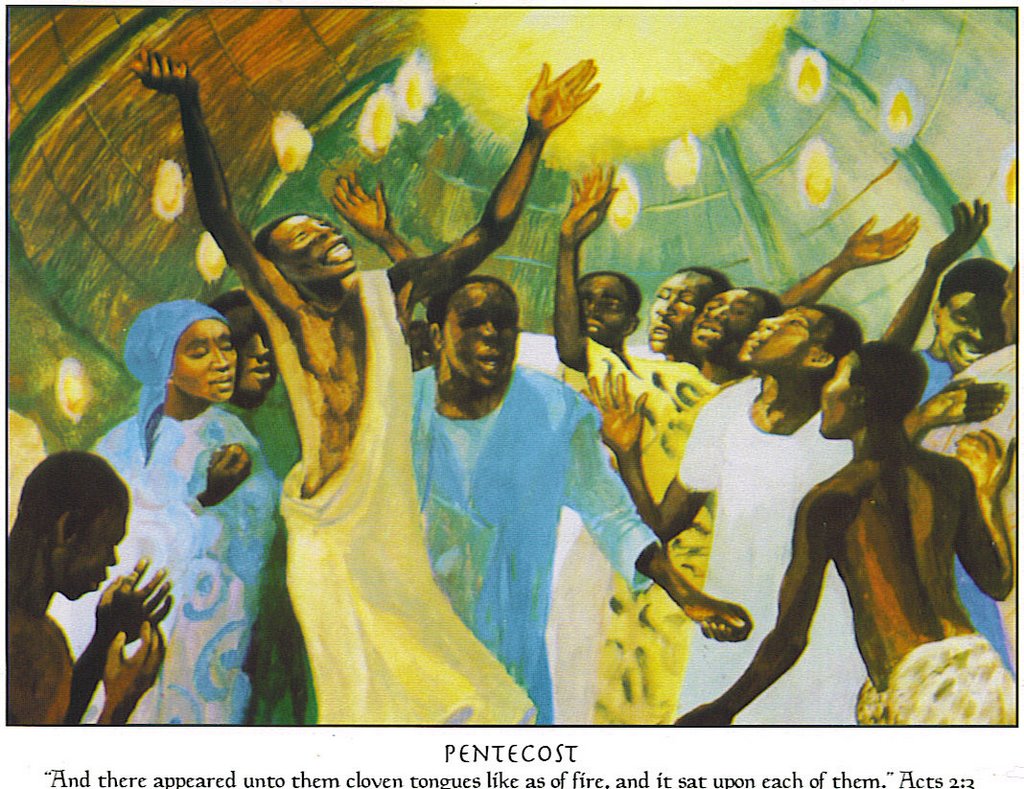
This article is a modification and abbreviation of a Spiritual Gifts paper submitted to Dr. Stephen K Awonyi, Professor, New Testament Survey 1, Simmons College of Kentucky, Fall Semester 2005. The picture, Pentecost can be found in the Original African Heritage Study Bible. The scripture reads, "And there appeared unto them cloven tongues like as of fire, and it sat upon each of them. Acts 2:3." To learn more about classes at Simmons College of Kentucky, click on the link in the heading.


Friday, July 14, 2006

Sharpton Sharper Than Two-Edged Sword

By: Minister Angela Lee Price

It's getting HOT in here! I can feel the heat from Dallas! Rev. Al Sharpton's blazin'! He's in rare form, and he's coming to Louisville. He will be speaking August 3rd at the Hyatt Regency Hotel. Sharpton's upcoming visit to the state's oldest historically black college, Simmons College of Kentucky and the General Association of Black Baptists in Kentucky's 138th Annual Conference energizes my hopes that black preachers will stop selling out and brainwashing our people, and start taking seriously their calls to speak truth to power.

Rev. Al Sharpton and other prominent black leaders spoke last week at the two-day National Conference and Revival for Social Justice in the Black Church conference at Friendship-West Baptist Church. Gordon Jackson in the article, No Social Justice, No Spiritual Peace said, "Not giving specific names, Sharpton and several of the other 100 ministers representing 20 states at the event criticized in general today’s Black mega-churches for emphasizing prosperity for their congregations, but leaving out practical agendas like helping its fellow man and uplifting the African-American community as a whole. " Click on the BlackPressUSA.com link in the title to read the full story.

Remember, it is not Mohammad, Buddha, Confucius, nor New Age that saves. Jesus saves!

Wednesday, July 12, 2006

Support Voting Rights Act Passage

By: Angela Lee Price

When I was the Voter Empowerment Coordinator for St. Stephen Church in 2004-2005, Frank Watkins, Congressman Jesse Jackson, Jr.'s press secretary, and I exchanged several e-mails regarding the expiration in 2007 of sections of the 1965 Voting Rights Acting. He forwarded an excerpt from the book, A More Perfect Union by Congressman Jesse Jackson, Jr. Below is an excerpt from his original excerpt to me. It explains Sections Four and Five of the Voting Rights Act, the sections that are set to expire in 2007.

To read the latest developments surrounding passage of the Voting Rights Act, click on BlackNews.com. Be sure to read Earl Ofari Hutchinson's article, Voting Rights Peril No Longer A Hoax.
------------------------------------
Excerpt from the book, A More Perfect Union,
By: Congressman Jesse Jackson, Jr.:

The Voting Rights Act (VRA) was enacted in 1965 to end Jim Crow laws and practices that prevented blacks from voting mainly in southern states. Most sections of the act were permanent, but Section Four was set to expire in 1970. Section Four defines which political subdivisions are subject to restrictions outlined under Section Five. Without Section Four, Section Five has no effect.

Specifically, Section Four declares that a state or other political subdivision is subject to Section Five if: "(a) it maintained a test or device as a condition for voter registration on November 1 of 1964, 1968, or 1972; and (b) either less than 50 percent of those citizens of legal voting age were registered to vote or less than 50 percent of such citizens voted in the presidential election held in the year in which it used a test or device." "Test or device" includes such instruments as literacy, educational achievement, and good moral quality tests. Section Four also provides that states can be exempted from Section Five if they can meet a strict standard of nondiscrimination in voting practices during the previous ten years. Sections Four and Five are the only temporary sections in the act.

Section Five applies only to those states with a history of using discriminatory voting procedures as defined in Section Four. Under Section Five, covered jurisdictions must submit any proposed voting procedure or election law changes to the Federal District Court for the District of Columbia, or the U.S. attorney general, for what is commonly called "preclearance." The covered jurisdiction must prove that the proposed change does not have the intent or effect of discriminating against any minorities. If the jurisdiction does not meet this burden, the proposed voting procedure or election law change cannot take effect. The expiration of Section Four would end Section Five federal preclearance for covered states that seek to change their election procedures.

Originally only applied to southern states, in 1970 Congress extended Sections Four and Five for five years and expanded coverage to all states. In 1975 Congress extended these sections for another seven years, while expanding coverage to protect the voting rights of ethnic groups whose language is other than English. In 1982, Congress again extended Sections Four and Five, this time for twenty-five years - through 2007. The 1982 extension also expanded federal oversight of state voting procedures.

The heart of the VRA is Sections Two, Four and Five. Section Two outlaws all forms of voter discrimination and allows states and individual citizens to challenge discriminatory voting procedures enacted by states (like Jim Crow laws). To challenge a voting practice, a plaintiff need only show that the voting practice has a discriminatory result, not that a discriminatory intent existed when the policy was implemented. Section Two applies to all states and citizens. Section Two also served as the impetus for the creation of equal opportunity minority political districts. However, some of those districts have subsequently been interpreted as unconstitutional by a "strict constructionist" and conservative Supreme Court using narrow interpretations.

Writing for the majority in City of Mobile v. Bolden (1980), Justice Potter Stewart argued that "racially discriminatory motivation is a necessary ingredient of a Fifteenth Amendment violation." So when the VRA came up for renewal in 1982, the Reagan administration did not so much try to end our protections of nondiscrimination in voting as it tried to weaken the enforcement provisions in Sections Four and Five by ending the preclearance provision. Ending that enforcement mechanism would have made the VRA much less effective. Consistent with Bolden, Reagan also tried to weaken Section Two by changing the criteria for court-determined voter discrimination by altering the standard of proof from "effect" to "intent." Proving intent is obviously more difficult, time consuming, and costly than proving effect. But in renewing and extending the VRA in 1982 for twenty-five years, Congress preserved the preclearance provision and insisted that the standard in voter discrimination cases was proof of a "discriminatory effect," not a "discriminatory intent." Such attempts at weakening the VRA must be resisted now and into the future.

Because Section Two is permanent, any election procedure with a discriminatory effect would continue to be illegal and could be challenged by an individual citizen or the federal government. In conjunction with the Fifteenth Amendment to the Constitution outlawing voter discrimination on the basis of race, color, or previous condition of servitude, Section Two ensures that African Americans will not be denied the federal legal right to vote, even if Sections Four and Five expires in 2007. However, without Sections Four and Five the burden falls to the aggrieved individual to remedy any voting discrimination, rather than the states having an affirmative duty not to discriminate as currently enforced through the preclearance provision.

No provision of the VRA is scheduled to expire before 2007. As the August 6 expiration date nears, Congress will examine the VRA's history and effectiveness and decide whether changes should be made and expiring provisions extended. In each of the last three instances in which Congress considered the VRA, it has strengthened and reauthorized it for an increasingly longer period of time (five years in 1970, seven years in 1975, and twenty-five years in 1982). However, if Republicans are in control of the House, the Senate, or the White House in 2007, and are joined by some conservative or southern Democrats, an effective 1965 Voting Rights Act could definitely be endangered through weakening its Sections Two, Four, and Five provisions. However, the greater immediate danger, before 2007, is a narrow interpretation of an equal opportunity minority political redistricting case by a "strict constructionist" and conservative Supreme Court, which could undermine the effectiveness of the Voting Rights Act.

I do understand the concern of many African Americans that there could be a threat to our voting rights. After all, it was only a little more than thirty-five years ago that southern states used Jim Crow laws and violence to deny blacks the ability to exercise their vote. A majority of African Americans alive today lived in a period where segregation and the denial of constitutional rights to blacks were not uncommon. Until we affirm the right to vote in the Constitution, the only real protection or "guarantee" of protecting our right to vote is to be politically informed with accurate information, and to maximize voter registration and political participation among all Americans. That is the one thing conservatives fear the most!


Remember, it is not Mohammad, Buddha, Confucius, nor New Ages that saves, Jesus saves!

Saturday, July 01, 2006

Mother Wit

By: Angela Lee Price


Mother To Son, by Langston Hughes

Well, son, I’ll tell you:
Life for me ain’t been no crystal stair.
It’s had tacks in it, and splinters, and boards torn up,
And places with no carpet on the floor – bare.
But all the time I’se been a-climbin’ on,
and reachin’ landin’s, and turnin’ corners,
And sometimes goin’ in the dark
where there ain’t been no light.
So boy, don’t you turn back.
Don’t you sit down on the steps ‘cause you find it’s kinder hard.
Don’t you fall now –
For I’se still goin’, honey,
I’se still climbin’,
And life for me
ain’t been no crystal stair.

Proverbs 1: 7-9 (KJV)

(V7) “The fear of the Lord is the beginning of knowledge, but fools despise wisdom and instruction.
(V8) My son, hear the instruction of thy father, and forsake not the law of thy mother:
(V9) For they shall an ornament of grace unto thy head and chains about thy
neck.”

The poem, Mother to Son by Harlem Renaissance poet, Langston Hughes is a classic and popular letter of counsel and encouragement. In it, a mother passionately admonishes her son to stay life’s challenging course as life for her “ain’t been no crystal stair.” Today, life still is no “crystal stair.” How we wisely handle life’s tacks, splinters, bare places - “places with no carpet on the floor,” is what the book of Proverbs is all about.

Proverbs 1:7 says, “The fear of the Lord is the beginning of knowledge and fools despise wisdom and instruction.” The Original African Heritage Study Bible explains this passage stating, “To the African/Edenic Hebrew the fear (respect) of God is the first step in worshiping the God of Israel,” and “When African people consider God to be omniscient, they are at the same time conferring upon Him the highest possible position of honor and respect, for wisdom commands great respect in African societies.”

In Hughes’ poem, the mother tells her son, “Don’t you set down on the steps ‘cause you finds it’s kinder hard. Don’t you fall now - for I’se still goin’, honey, I’se still climbin’, and life for me ain’t been no crystal stair.” Does the son respect the Lord and welcome his mother’s wisdom, or does he disrespect the Lord and reject her counsel? We have no way of knowing, for the poet does not provide answers to those questions. The Lord does, however, provide answers in the Bible to all questions. He makes it clear through Solomon in Proverbs Chapter 1 that following the godly instruction and teaching of father and mother will yield positive results, “an ornament of grace unto thy head and chains about thy neck. (v9)”


(The picture, The Virtuous Woman was taken from The Original African Heritage Study Bible. Proverbs 1:7-9 can be found in the St. Stephen Church Get Some Sense Month July 2006 Study Guide: A Thirty-One Day Personal Meditation.)

Monday, June 26, 2006

Angela Lee Price Goes One-On-One with Pastor Gary Gilley

On Saturday, June 24th, Gary Gilley, Senior Pastor of Southern View Chapel Church spoke with me on 1350 WLOU Radio from Springfield, Illinois about his concerns with the movie, The Da Vinci Code. We also discussed the market-driven church and emergent church movements. Gary Gilley is the author of several books including This Little Church Went to Market. Gary Gilley's articles on aberrant and heretical trends within Christianity can be found on a number of websites and blogs on the internet. These include The Da Vinci Code Deciphered, The Market-Driven Church: A Look Behind the Scenes, and The Purpose Driven Life: An Evaluation, and Church Discipline and Church Growth. These, other articles and radio interviews can also be found at svchapel.org.

Gary Gilley will be speaking Thursday morning, June 29th at 9:00 a.m. here in Louisville, Kentucky on the Emergent Church at the IFCA International Convention at the Clarion Hotel and Conference Center, 9700 Bluegrass Parkway.

June 24th Interview - Part 1 - The movie, The Da Vinci Code
this is an audio post - click to play


June 24th Interview - Part 2 - The Market-Driven & Emergent Church Movements
this is an audio post - click to play


June 24th Interview - Part 3 - The Emergent Church Movement
this is an audio post - click to play


Related Articles on This Blog:

Da Vinci Code Deciphered, May Archives
Church Growth: Is Bigger Always Better?, April Archives
The Emergent Church, March Archives
Radio Responses to the 50 Most Influential Christians In America, March Archives
The 50 Most Influential Christians In America, February Archives
Are You Letting Yourself Down?, February Archives
Prophetic or Pathetic?, February Archives
Ease On Down the Road...to Heaven?, January Archives

Remember, it is not Mohummad, Buddha, Confucius, nor New Ages that saves. Jesus saves!

Thursday, June 22, 2006

Gary Gilley Interview and Da Vinci Code Feedback

Be sure to join me Saturday afternoon, June 24th, between 12:00-2:00 p.m. on WLOU Radio-1350 AM. I will be speaking with Rev. Gary Gilley, Pastor of Southern View Chapel, Springfield, Illinois in a 10-minute phone interview. He has written extensively on aberrant and heretical trends within Christianity. Pastor Gilley will be speaking in Louisville next week on the Emergent Church at the IFC Conference. The May and June editions of Jesus Saves Newsletter references his article, The Da Vinci Code Deciphered. Make plans to join us as we discuss the movie, and the Purpose Driven and Emergent Church movements.

On Friday morning, June 2nd, I asked WLOU radio listeners if they were concerned that doctrinal errors were being depicted as truth in the movie, The Da Vinci Code. I also asked if they were going to see the movie, and if they knew whether or not their church was planning to discuss the subject. Below are responses from three listeners.

Jason, Bates Memorial Baptist Church:
this is an audio post - click to play


Charise Taylor:
this is an audio post - click to play


Arthur Bivens, First Baptist Church of Jeffersontown:
this is an audio post - click to play


Related Articles on This Blog:

Da Vinci Code Deciphered, May Archives
Church Growth: Is Bigger Always Better?, April Archives
The Emergent Church, March Archives
Radio Responses to the 50 Most Influential Christians In America, March Archives
The 50 Most Influential Christians In America, February Archives
Are You Letting Yourself Down?, February Archives
Prophetic or Pathetic?, February Archives
Ease On Down the Road...to Heaven?, January Archives


Remember, it is not Mohammad, Buddha, Confucius, nor New Ages that saves. Jesus saves!

Tuesday, June 20, 2006

Church Growth From An African American Perspective: A Book Review

By: Angela Lee Price


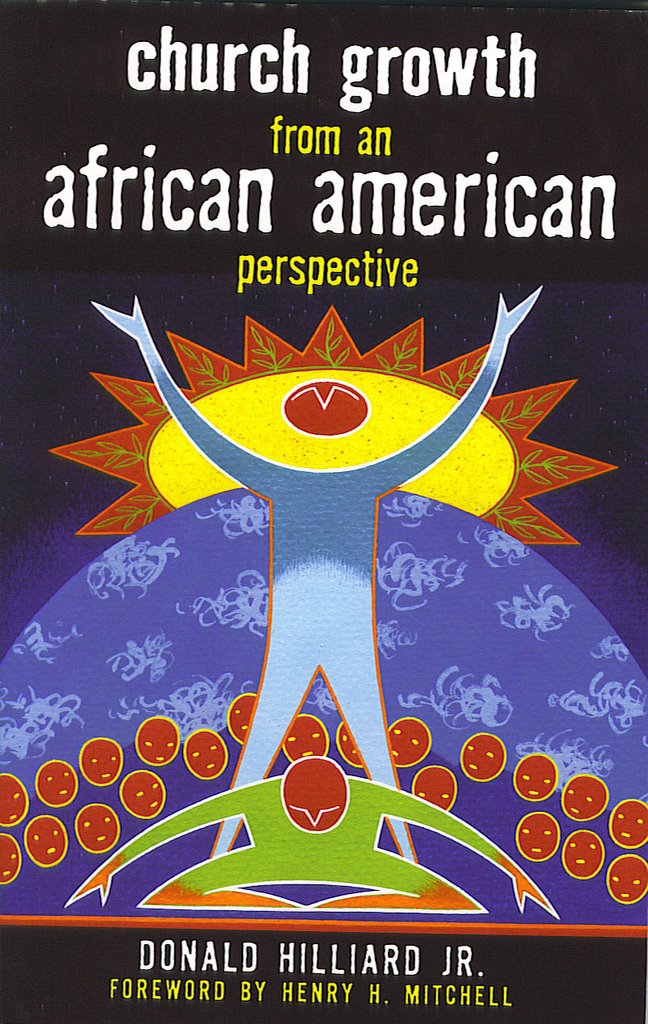
I highly recommend the 146-page new book, Church Growth from an African American Perspective, by Donald Hilliard, Jr. available at Donald Hilliard Ministries.

After taking his congregation from 125 members to its current membership of 7,000, Bishop Donald Hilliard, pastor to Cathedral International in Perth Amboy, New Jersey shows church leaders how to grow spiritually healthy congregations. A significant focus of the book is on developing spiritual maturity as the means to church growth. Hilliard states, “Many churches are lopsided in their preaching, focusing only on a ‘prosperity’ message or a ‘faith’ message or on ‘signs and wonders.’ Balanced biblical preaching takes in the entire biblical revelation and helps promote the development of biblically balanced believers in the church.” In the section, “Measuring Church Growth,” Hilliard states, “Increases in numbers and wealth may make a church bigger, but apart from spiritual growth and relevant outreach, they do not necessarily make a church better.

Church Growth From An African American Perspective consists of two parts, "Fundamentals for a Growing Church," and "Practical Dimensions" and is comprised of the following 11 chapters:
  1. Understanding Church Growth
  2. Preparing for Growth
  3. Foundations for Healthy Church Growth
  4. Principles of Healthy Church Growth
  5. Purposeful Prayer
  6. Prophetic Preaching
  7. Powerful Worship
  8. Pertinent Ministry
  9. Practical Christian Education
  10. Growing A Church Through Multiplication
  11. The Church At Its Best

I appreciate Church Growth From an African American Perspective for a number of reasons. It is not another Rick Warren and Bill Hybels spin-off. Hilliard does not endorse a lot of non-Christian experts the way Warren does in Purpose Driven Life, nor does he use the Message Translation. Only a handful of names, other than those in the Bible, are mentioned in the book, highly respected pastor Gardner C. Taylor, and William Carey, a Baptist shoemaker for England, and one or two others. The preface is written by renown African American theologian Henry H. Mitchell. Most scriptures appear to be from the New Revised Standard translation.

I appreciate Hilliard's gentle plea throughout the book for pastors and preachers to remain committed to preaching the whole Bible from Genesis to Revelation, and not pat scriptures and "feel good" messages. I appreciate Hillard bringing the mega church phenomenon into perspective. He encourages pastors who are stressed out by all the hype to realize that mega churches account for a small percentages of all churches nationally. Pastors with small and midsize churches will gleam insight from the Catherdal International model. Hilliard provides action steps throughout the book to help pastors and leadership work together to present a unified voice to their congregations. For the busy pastor, this book is a quick read, and well worth the investment.

Related articles by Angela Lee Price:

Noel Jones: Word of Faith Theology is Crippling the Black Church, May post
Church Growth: Is Bigger Always Better?, April Archives
Radio Responses to 50 Most influential Christians in America, March Archives
The 50 Most Influential Christians In America, February Archives
Are You Letting Yourself Down?, February Archives
Prophetic Or Pathetic, February Archives
Follow the Yellow Brick Road...to Heaven?, January Archives


Remember, it is not Mohammad, Buddha, Confucius, nor New Ages that saves. Jesus saves!

Monday, June 19, 2006

Interpreting the Pauline Epistles: A Book Review

By: Angela Lee Price

Interpreting the Pauline Epistles by Thomas R. Schreiner, originally published in 1990 is a book written to help college religion majors, seminarians and pastors interpret the Pauline letters. It is one in a series of seven books written by various scholars aimed at providing principles and methods for New Testament exegesis. Schreiner employs methods distinct to interpreting the Pauline Letters, the Letters Genre, while other scholars utilize principles and methods of interpretation distinct to each of the three remaining New Testament literary genres, the Gospels, the Acts of the Apostles, and the Apocalypse in The Guide to New Testament Exegesis series based on Gordon Fee’s introduction to New Testament Exegesis: A Handbook for Students and Pastors written in 1983.

Interpreting the Pauline Epistles is divided into nine chapters wherein Schreiner addresses the following topics:

· Understanding the Nature of Letters
· Doing Textual Criticism
· Translating and Analyzing the Letters
· Investigating Historical and Introductory Issues
· Diagramming and Conducting a Grammatical Analysis
· Tracing the Argument
· Doing Lexical Studies
· Probing the Theological Context
· Delineating the Significance of Paul’s Letters

Interpreting the Pauline Epistles by Thomas R. Schreiner is a power-packed book. It not only provides instruction on proper exegesis of the Letters Genre, it also provides a wealth of resource material on the subject. Thomas Schreiner list over one hundred books pertaining to New Testament history, culture, primary and secondary sources, sociology and psychology, including dictionaries, encyclopedias and commentaries to aid Bible students, seminarians and pastors in the exegetical process. Some people may find this book to be a valuable resource, particularly if they are interested in stocking their library with information on interpreting the Pauline letters.

The book offers over one hundred sources to aid the Bible students in interpreting the Pauline letters, however, I could not find one recognizable African American scholar listed among its many recommendations, nor could I find one recognizable female author. I would not recommend this book to anyone interested in understanding the African American perspective on biblical interpretation, nor would I recommend it to female preachers and pastors of color, particularly if they have not read books on the same subject by African American scholars.

Finally, I feel very strongly that African American scholars are not being supported through the purchase of their books as they should. Dr. Forrest Harris, president of American Baptist Bible College in Nashville made this point eloquently his November 17, 2005 sermon, “Preaching Freedom Today” while at Simmons College of Kentucky for the school’s Founder’s Day observance. He stated in the evening address that, “We are too busy gobbling up material by people like Robert Schuller, Steven Covey, Rick Warren, T.D. Jakes, Charles Stanley and others as if black theologians and black poets haven’t written anything.”

I agree with Dr. Harris. When African Americans purchase materials by white authors exclusively or in preference to African American contributions, we not only deny the critical abilities of people of color, but also contribute to the proliferation, to use Dr. Harris’ words of Rick Warren’s work, “non-prophetic discourse” prevalent today.

(An abbreviation of an book review assignment originally submitted to Dr. Stephen K. Awoniyi, Professor, New Testament Survey 1, Fall Semester 2005, Simmons College of Kentucky.)

An excerpt from Dr. Forrest Harris' message, Preaching Freedom Today, Simmons College of Kentucky, Founder's Day observance, November 13, 2005.

this is an audio post - click to play


Remember, it is not Mohammad, Buddha, Confucius, nor New Ages that saves. Jesus saves!


The Case Of The Church Vs. Mere Man

By: Minister Michael Lee


1 Corinthians 3:1-15 (NIV)
1 Brothers, I could not address you as spiritual but as worldly—mere infants in Christ.
2 I gave you milk, not solid food, for you were not yet ready for it. Indeed, you are still not ready.
3 You are still worldly. For since there is jealousy and quarreling among you, are you not worldly? Are you not acting like mere men?

I understand that there is a trial going on here today. Oh yea, I have it on good authority that someone is on trial here today. And you came here today to be witnesses in this trail. Is that right? Well, there is a trial here today, and if you would permit me, I would like to present, The Case Of The Church vs. Mere Man.
In chapter 3, we find that the consequences of the divisions in the body have led to the stunting of the Corinthian’s spiritual growth. Paul says I could not talk to you as spiritual, but I had to talk to you as worldly. This is because you, Oh Corinthians, were mere infants in Christ. I could not feed you the meat of the Gospel because your stomachs was not ready for it. I had to give you milk, that is, the most elementary understanding of the Gospel.

In verse 3 Paul levels a serious indictment against the Corinthian believers. He charges them with acting like natural men, with acting like mere men. He charges them with acting like men and women who do not even believe in Jesus Christ, yet they carry the name Christian. They met together on a regular basis like Christians and perform many of the same duties as Christians, but something was seriously wrong. It is Mr. and Mrs. “Mere Man” who are on trial today.

First , as I’ve mentioned, Paul charges the Corinthian church with acting like Natural man. Paul says in verse 3 that they are still worldly. The word used here is the Greek word, “sarkeekos.” This word means “fleshly,” under the control of the animal appetites. It means “fleshly,” or “carnal,” one who is more inclined to fulfill the desires of the flesh than deal with spiritual things.

If your 8-month-old child is crawling on the floor with a pacifier in his mouth, and pulls up on a chair or something and tries to walk, and has one or two words that he knows and coos at you when you wave at him, then that’s cute. However, if you come back four or five years later and that same child is still crawling and cooing and saying those same one or two words, then that’s not cute at all. Something is wrong! That child is seriously retarded. He is “developmentally challenged” for the politically correct crowd. And if his parents have not already been to see about that child, then something is seriously wrong with the parents. They keep talking him being a late bloomer, when something is seriously wrong!

There is nothing wrong with loving our leaders. Nevertheless, Mere Man needs to understand that you don’t have to knock down one to build up another. All of our leaders are gifted with certain strengths and talents, and all of them can be beneficial to our growth in whatever stage of development we find ourselves.

In verse 9 Paul says that they, the Christian leaders, are fellow workers with God, working on the same building. But he stresses in verse 11 that no one can lay any foundation other than the one already laid, which is Jesus Christ. It’s not Peter, it’s not Paul, it’s not Apollos, it’s Jesus. It’s not denominations nor organizations, it’s Jesus. It’s not the Greek letters you wear nor your political affiliations, it’s Jesus. It’s not where you were educated nor how many degrees you have, it’s Jesus.

Mere Man doesn’t understand that God loves all of his children, even the ones that you can’t stand, even the ones that get on your last nerve, and even the ones that make you sick. Well, God loves them. God wants to save them, and God wants to use you to help do it!

It seems that Mere Man doesn’t understand that while he’s majoring in the minors, our minors are being taken captive by the insidious lures of this world. It is partly because they don’t see an authentic Christianity being lived in their homes.

Our adversary has been using the divide-and-conquer technique since the beginning. He knows that while there is strife and arguing and petty jealously working in the body, the church becomes less and less effective, the people of God become spiritually weak, and ineffective, or even worse, fail to develop through their normal stages of spiritual development.

You wind up with a bunch of baby chicks sitting on pews waiting for another dose of chewed up, half-digested pablum Sunday after Sunday, with no power to change anything, not even their own minds.

(An excerpt from my brother's, Minister Michael Lee's trial sermon delivered to Joshua Tabernacle Baptist Church, Louisville, Kentucky, April 23, 2006.)

Remember, it is not Muhammad, Buddha, Confucius, nor New Ages that saves. Jesus saves!


LinkWithin

Related Posts Plugin for WordPress, Blogger...